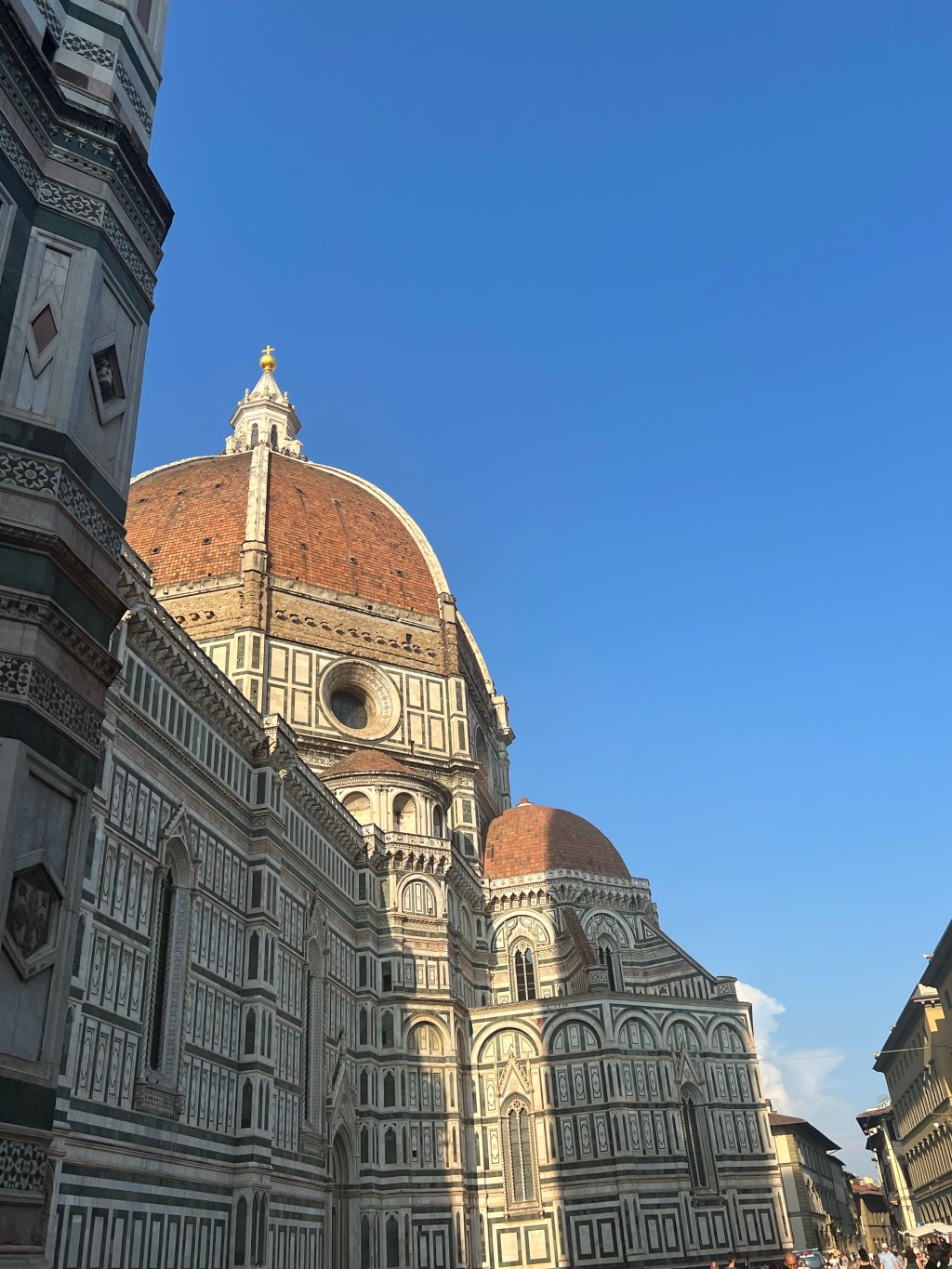
We finished our final morning in Rome with breakfast at our hotel and cappuccino and then took the train to Florence. Traveling by train is one of our favorite things to do in Europe. It’s so relaxing to watch the beautiful countryside pass by as we enjoy the air conditioned cabin.
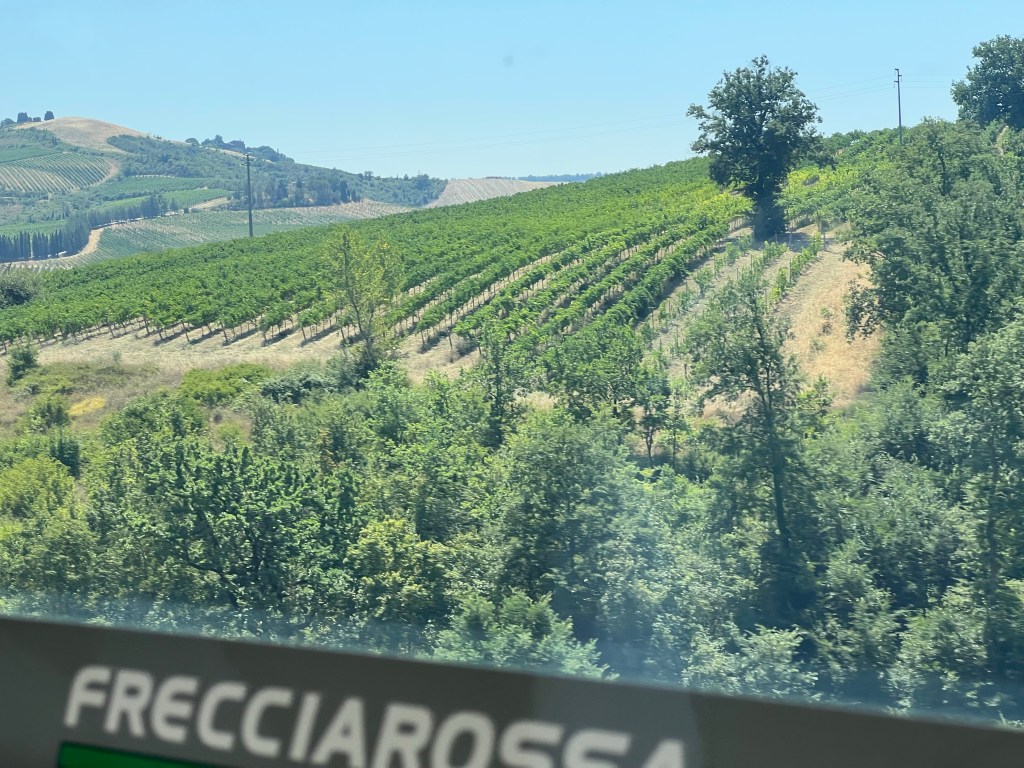
Once we arrived in Florence, our concierge was kind enough to book us a walking tour of the city for the afternoon and walk us to one of his favorite local restaurants. Yes, he actually walked us there, which was so sweet!
We ate at a restaurant that is known for the wines it produces, so naturally, we had to have wine with lunch. Our meal came from the recommendations of the fantastic waiter we had.
We started with a chickpea flour pancake with pancetta and cheese stuffed inside, a glass of red wine, and a selection of their fresh meats and cheeses. It was absolutely incredible! Hands down the best charcuterie we’ve ever had, and we’ll definitely be going back for those pancakes!


We were in a bit of a hurry since we only had 45 from getting to the restaurant to when our tour started.
After we paid our bill the hostess told us to wait for a moment. We started to explain we had to meet up with our tour guide and she explained the concierge called the restaurant and was bringing the tour guide to us- such service!
While we waited for our guide to arrive, I ordered an Italian meringue cookie and Bryce got a pastry from their delicious bakery as well. A perfect way to kick off our time in Florence!
Our guide then took us in a large loop around the city.
We went to the Basilica of Santa Maria Novella, the Officina Profumo-Farmaceutica di Santa Maria Novella, Basilica San Lorenzo (Medici Chapels), and one of the homes of the Medici family.
What we learned walking through the streets of Florence:
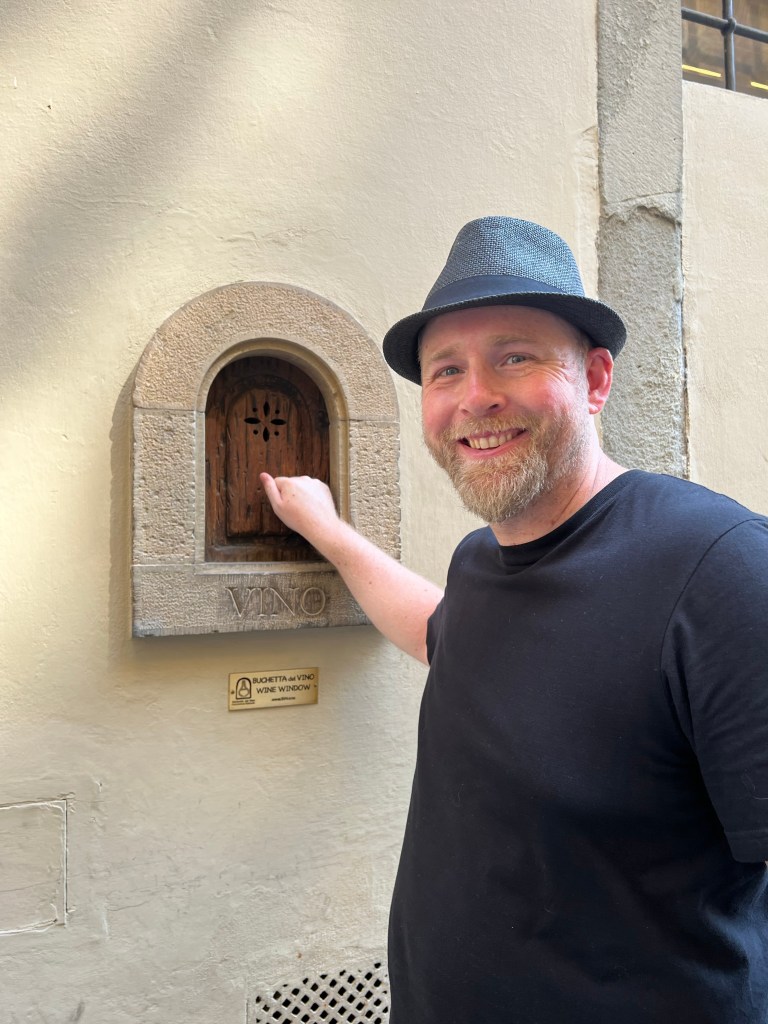
- Back in the day wine couldn’t be preserved like it can be today, so it needed to be sold as soon as possible. So cellars would hire “cellar boys” to man these little windows. Basically, they were wine drive-thru windows. People would knock on the window and get a glass of wine to go.
What we learned at the Basilica of Santa Maria Novella:
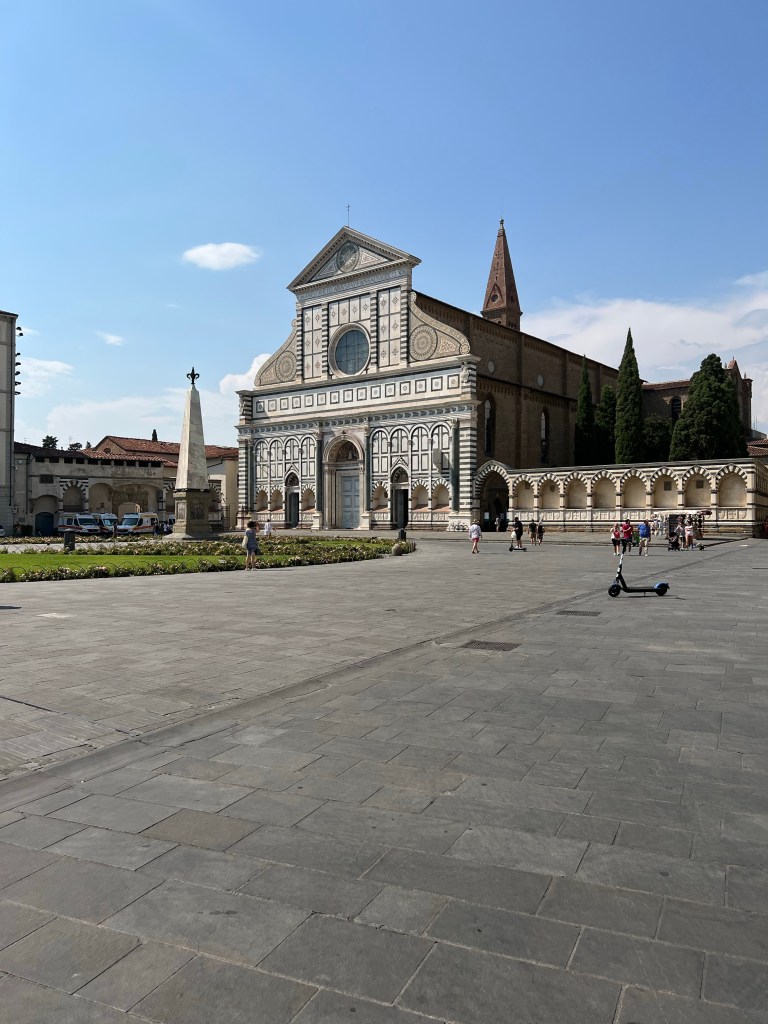
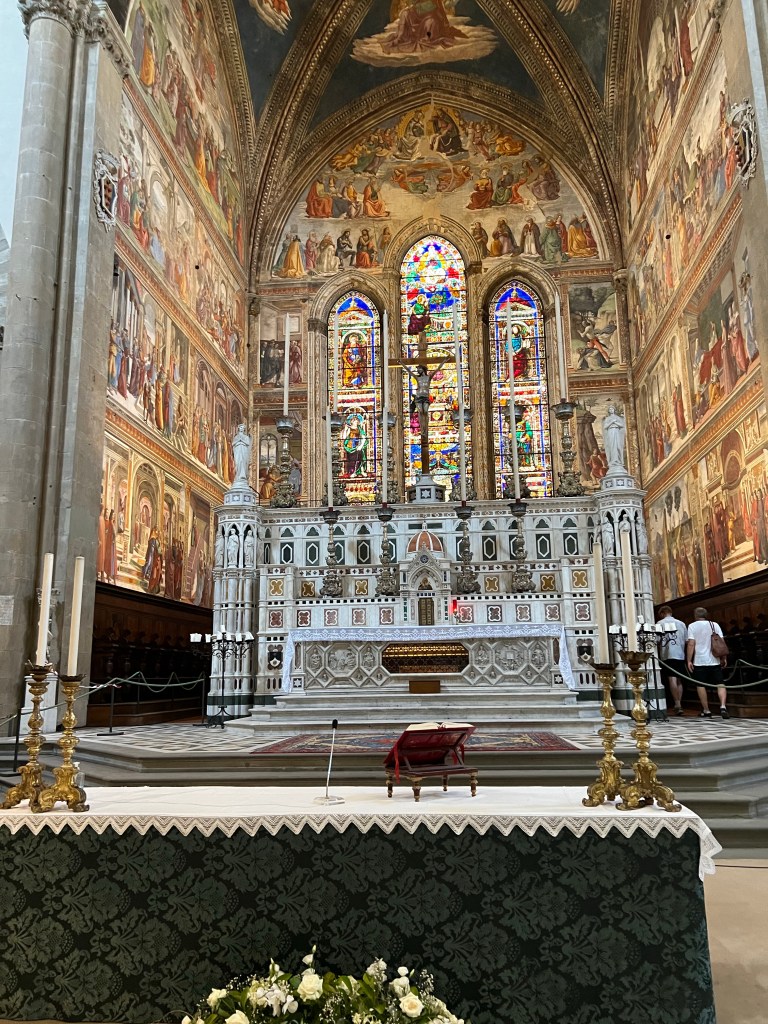
- This is a Dominican church and monastery. It’s the first great basilica in Florence. It’s facade was completed by Leon Batista Alberti in 1470.
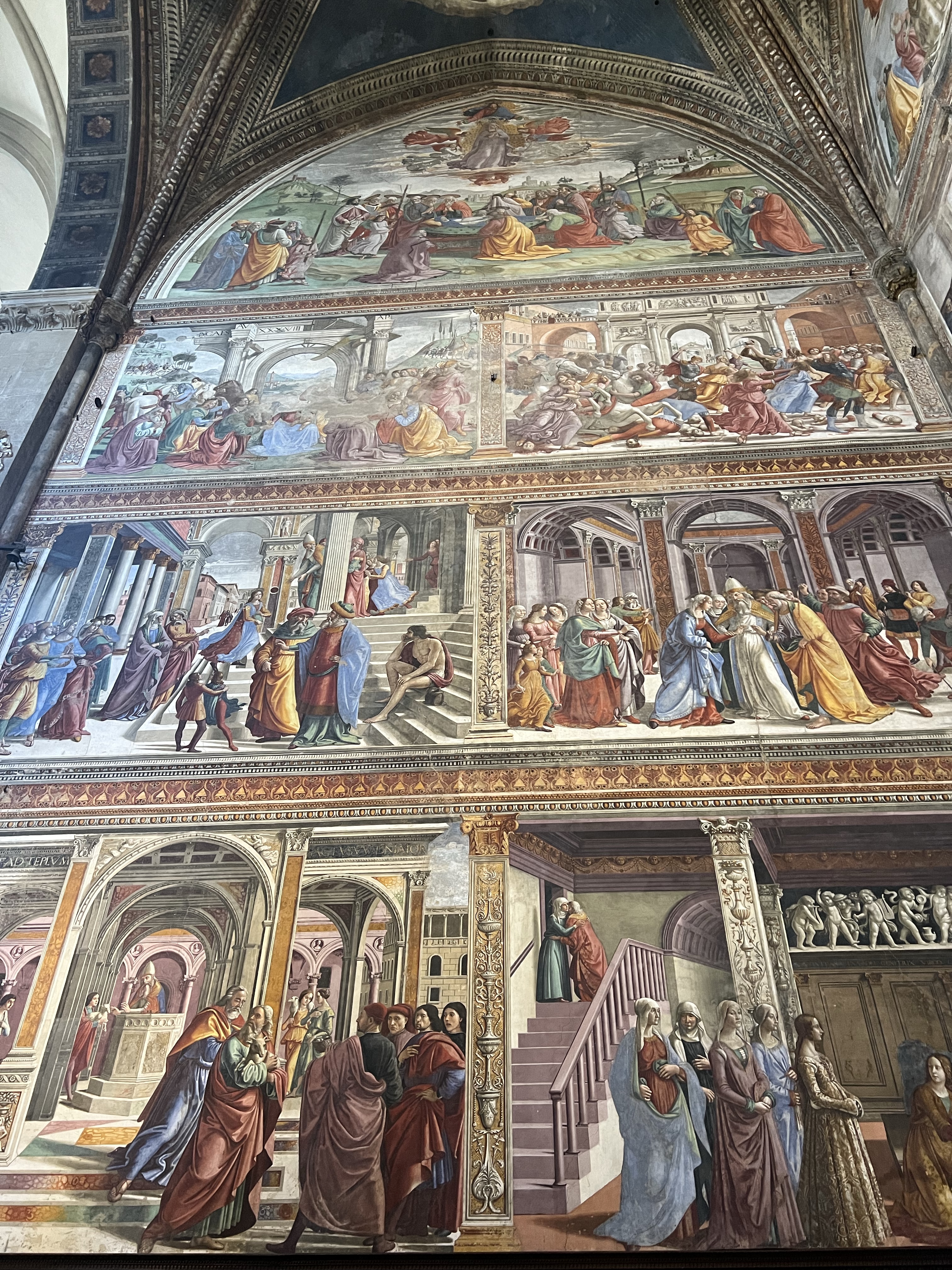
- In this church there are many beautiful frescos. The frescos were painted by Domenico Ghirlandaio from 1485 to 1490. Ghirlandaio didn’t paint these frescos alone. In fact, one of his assistants was Michelangelo. This is where it’s believed he learned to paint frescos.
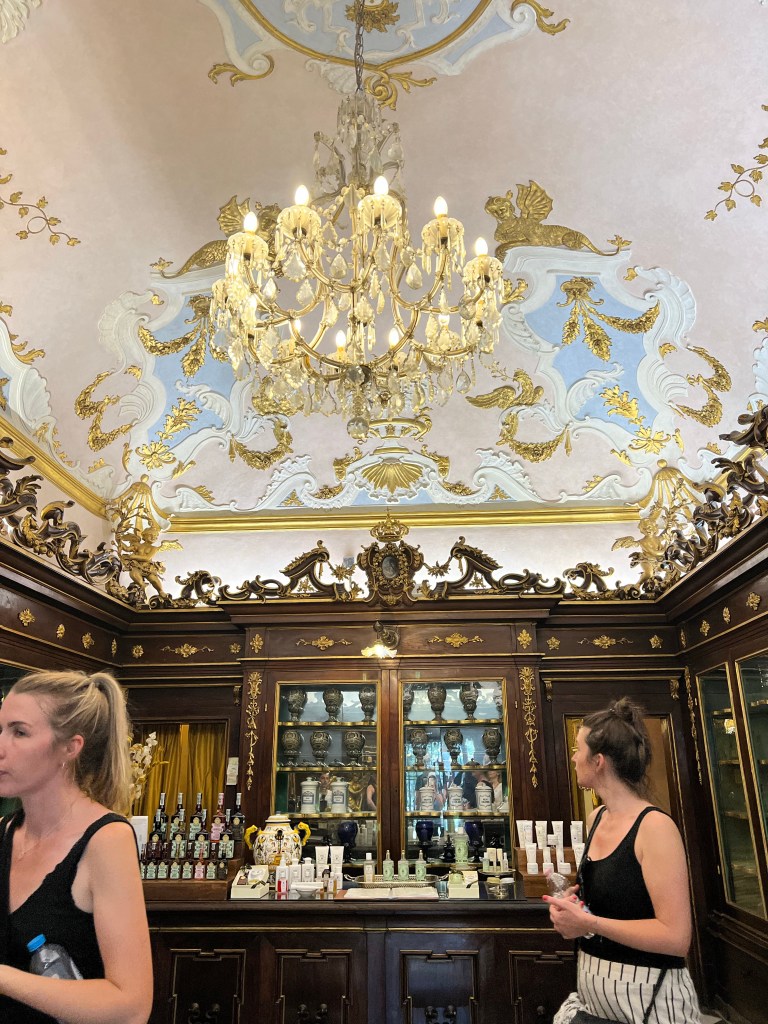
- Attached to the monastery is an old pharmacy, where ill Dominican friars could get medicine. It’s now been transformed into the Officina Profumo-Farmaceutica di Santa Maria Novella, where they still use some of the recipes from the old Dominicans to make perfumes, soaps, lotions, potpourri, and candles.
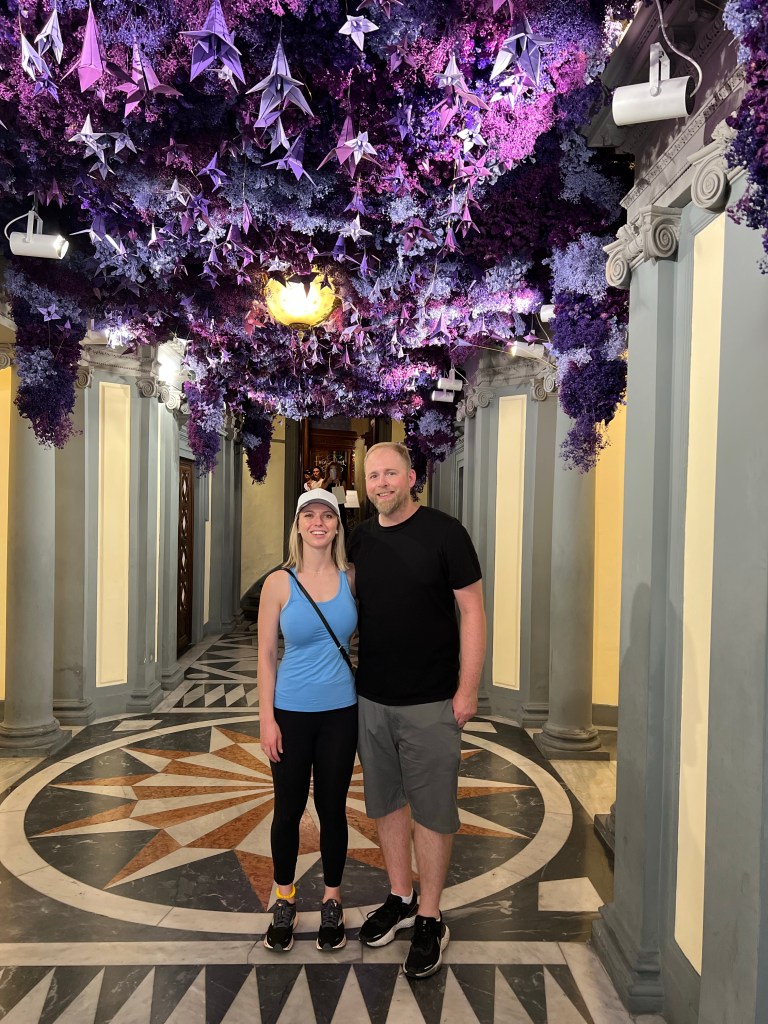
What we learned at the Officina Profumo-Farmaceutica di Santa Maria Novella:
- Back in the day, the Dominicans considered themselves the “dogs of the Lord.” Meaning, they were the tough protectors, or the army of the church. Some sects of the Dominican Friars were known for being brutal, particularly towards women whom they presumed to be “witches.” Why were they called witches you ask? Well, because they would make “medicines” for the people. The Dominicans would punish these women for their “witchcraft” through imprisoning them or killing them.
- After looking around the Officina Profumo-Farmaceutica di Santa Maria Novella, and noticing the books of “medicinal recipes” Bryce asked the tour guide how what the Dominicans did was different than the “witches” of the time? Her answer was basically, “Umm yeah, you can see it was pretty much the same, except they were women, and they didn’t write their recipes down.” (I kind of doubt it was the lack of written recipe that upset the Friars)
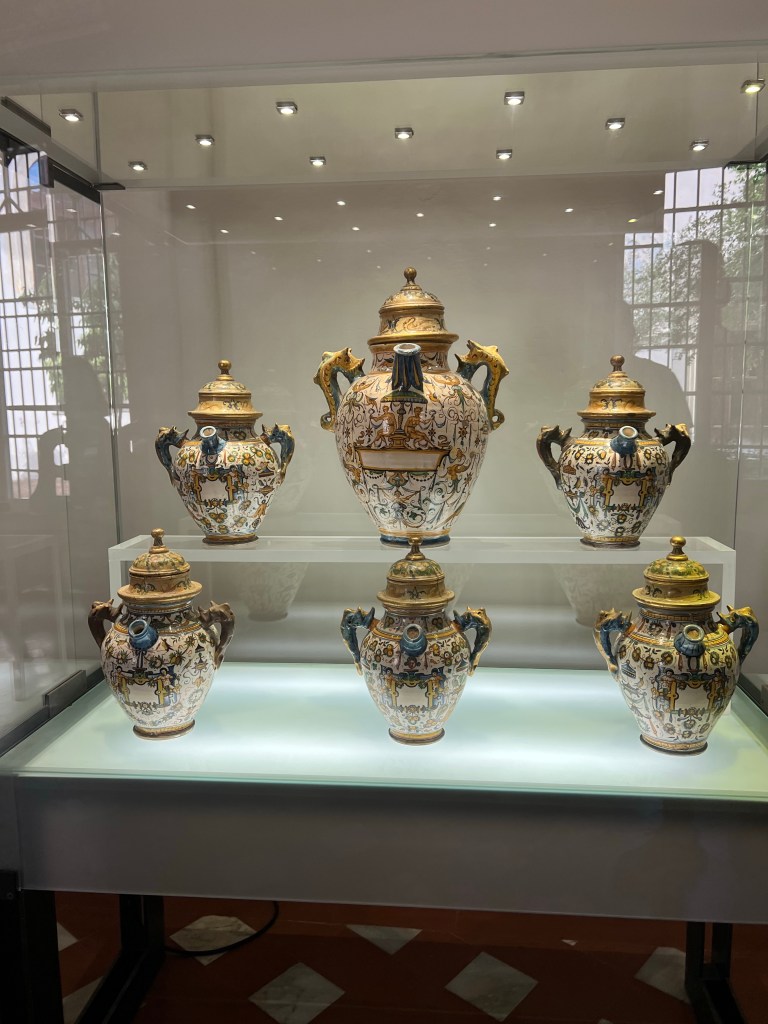
We just finished watching the Netflix show, Medici (which we highly recommend) prior to coming to Florence, so we have a fascination with all things Medici.
What we learned at Basilica San Lorenzo:
- This is the church built by the Medici, and is where many of the Medici Family are buried.

- The Medici Family was in its prime during the time of Cosimo, Piero the Gouty, and Lorenzo the Magnificent, in the 1400s. By the 1500s they were slowly losing money, and by the 1600s they were less prominent. The decreased finances can be seen in the church, as construction began in the back and worked towards the front. The front is very, very plain because they didn’t have the finances to maintain the ornate-ness that’s seen throughout the church.
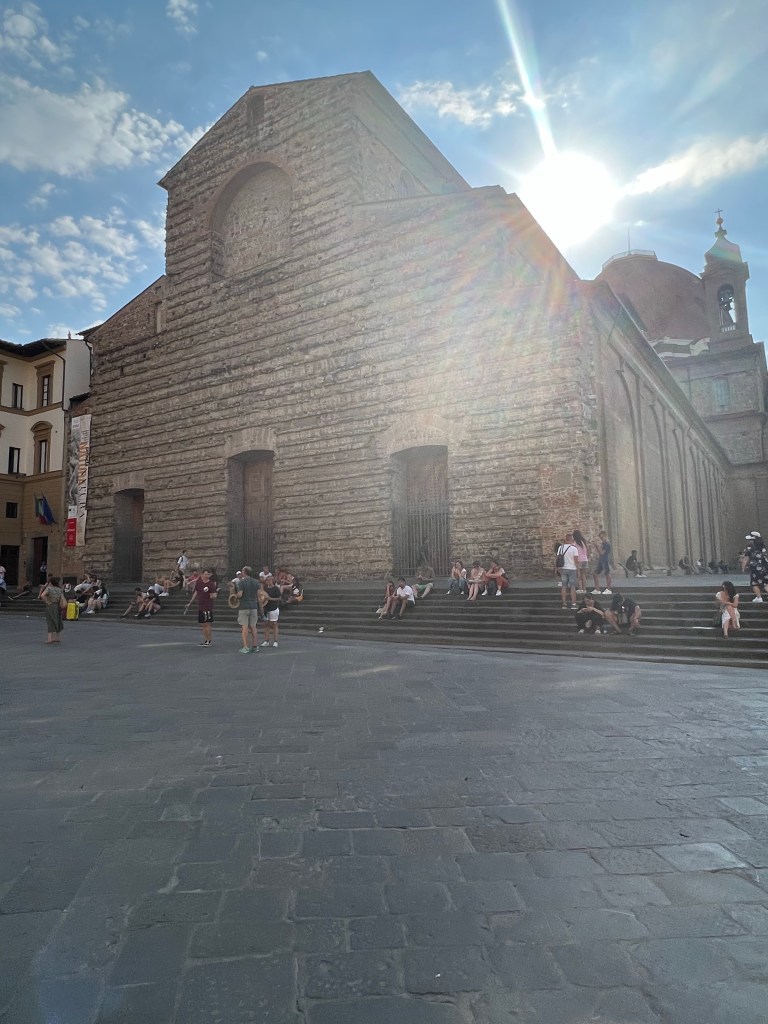
- In 1419 the project begun with Brunelleschi as the architect and designer. However, only the Old Sacristy is the work of Brunelleschi. Brunelleschi died in 1446, and a new designer took over.
- The Old Sacristy is very striking, and is actually a celebration of death. It is the final resting place of some of the prominent members of the Medici family. You can see that the project was not completed, likely due to lack of funding for the remaining sculptures to be created.


- Michelangelo was the original designer of the New Sacristy where other members of the Medici are buried. He wasn’t able to finish the project as he actively opposed the Medici family and had to flee to Rome mid-project.
- He left behind the four statutes found on two of the sarcophagi and the statue of Virgin and child.
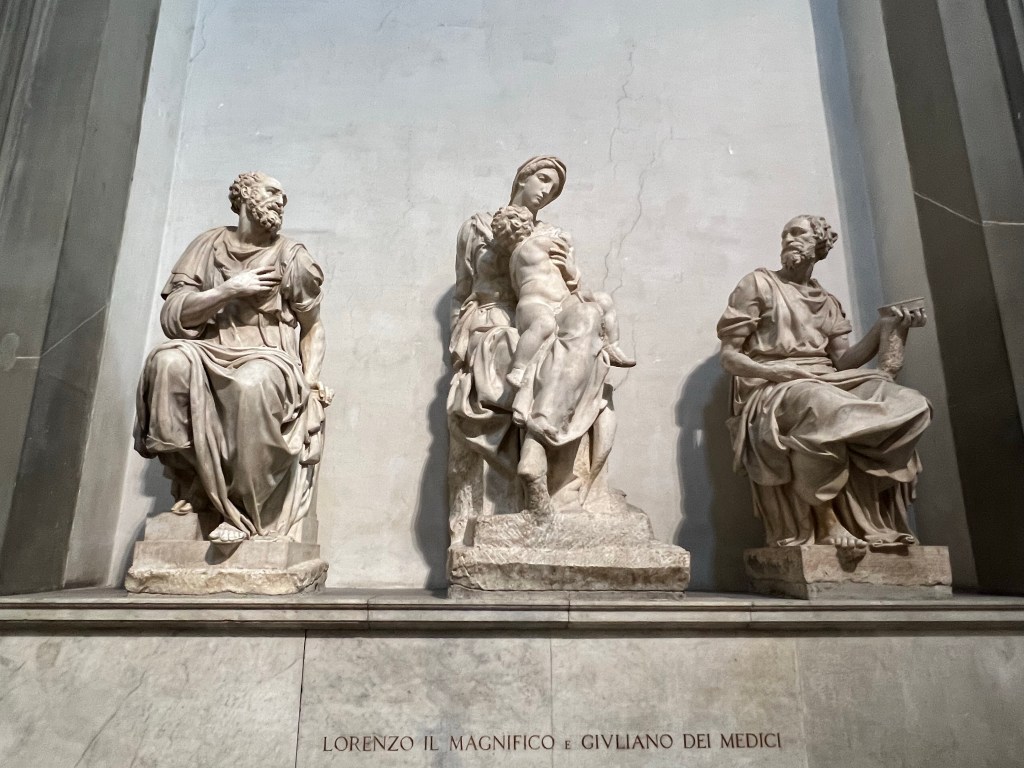
Lastly, we visited one of the three homes/palaces of the Medici Family. This is the home where Cosimo, Piero the Gouty, and Lorenzo the Magnificent all lived at one point in their lives. The filming of the show did not occur here, but seemed to be the inspiration, as it looked very familiar. There wasn’t very much to see in this house, because the Medici did sell it so there’s really only the family’s chapel that belonged to the Medici.
Here’s what we learned at the Medici House:
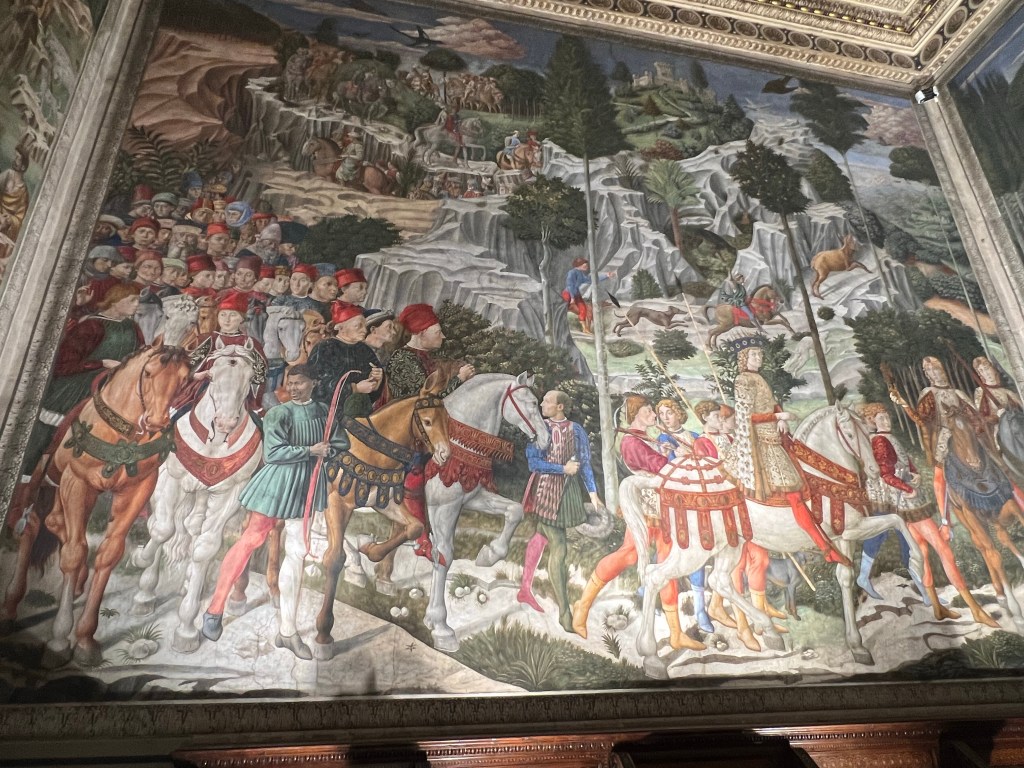
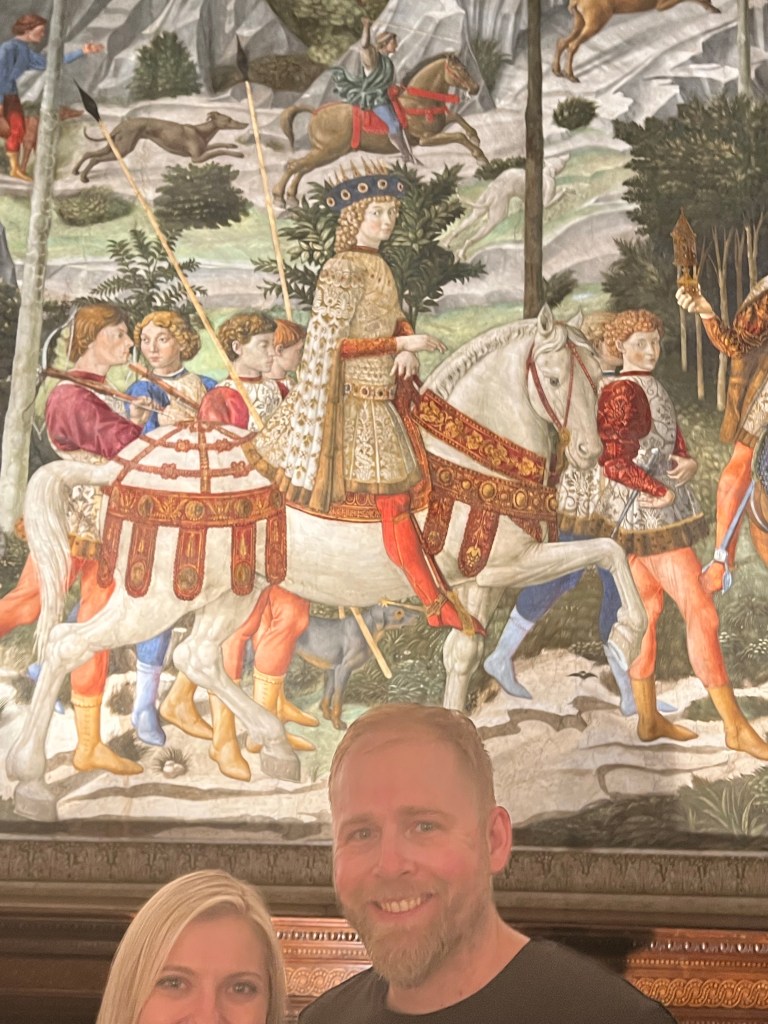
- Since the house was not the final home of the Medici, a second owner made some modifications, including adding a staircase which changed the shape of the Medici’s chapel. You can see that the end of the horse is on one wall and the head is on the other.

- Our favorite part of the tour was seeing this painting, which is frequently feature on Medici. In this fresco, young Lorenzo wears a crown of a king in a processional where older members of his family follow behind him.
What else did we learn on this tour?:
- Our tour guide was very good! Super knowledgeable, great speaker, interesting storyteller, but not a great photographer.
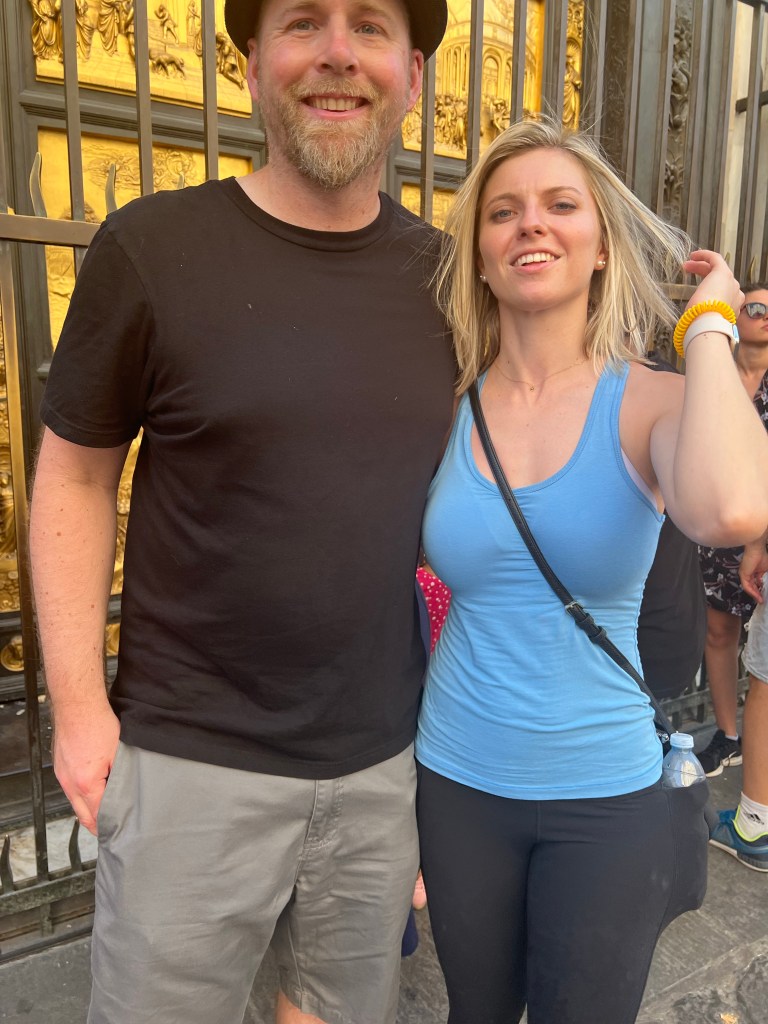
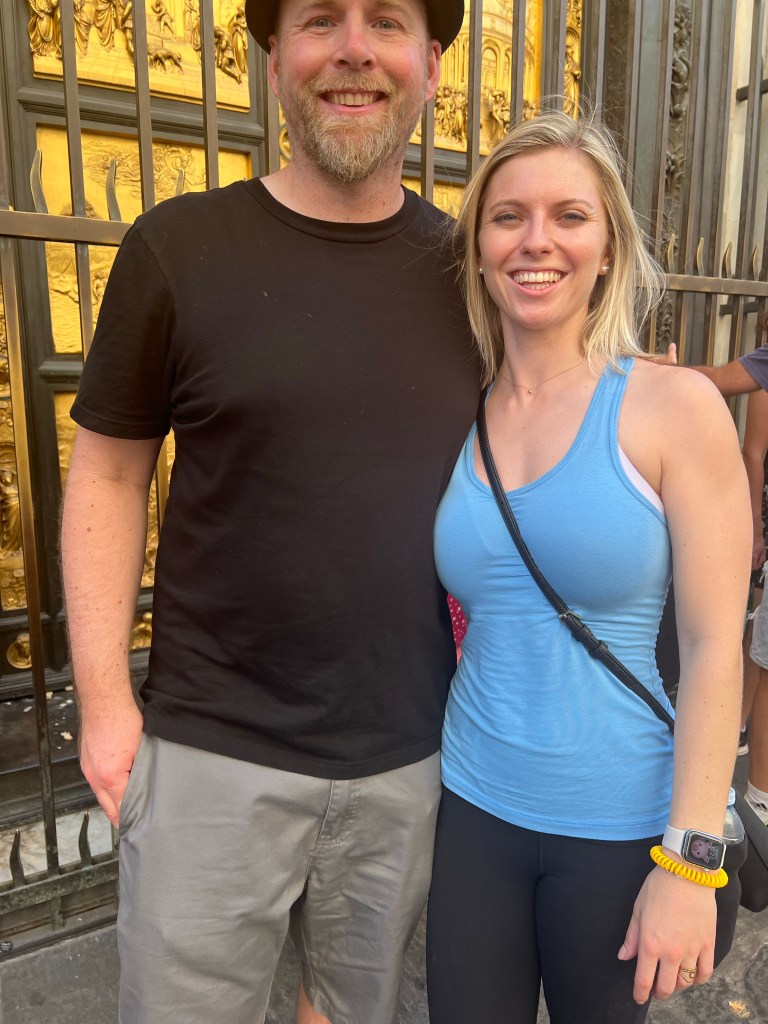
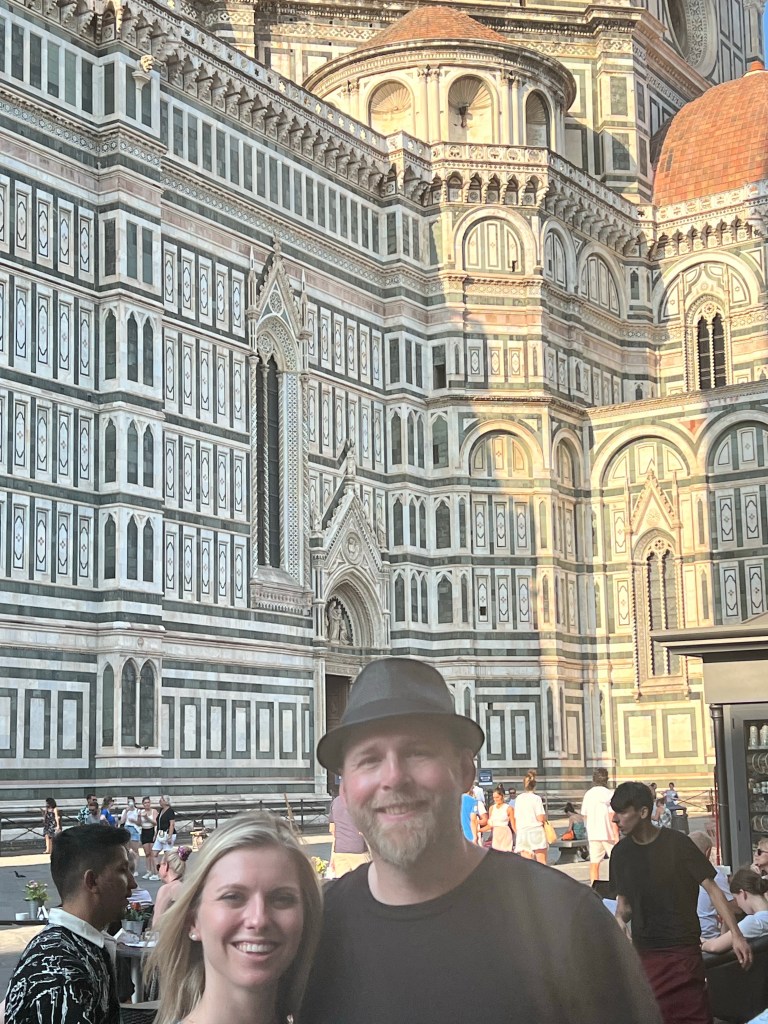
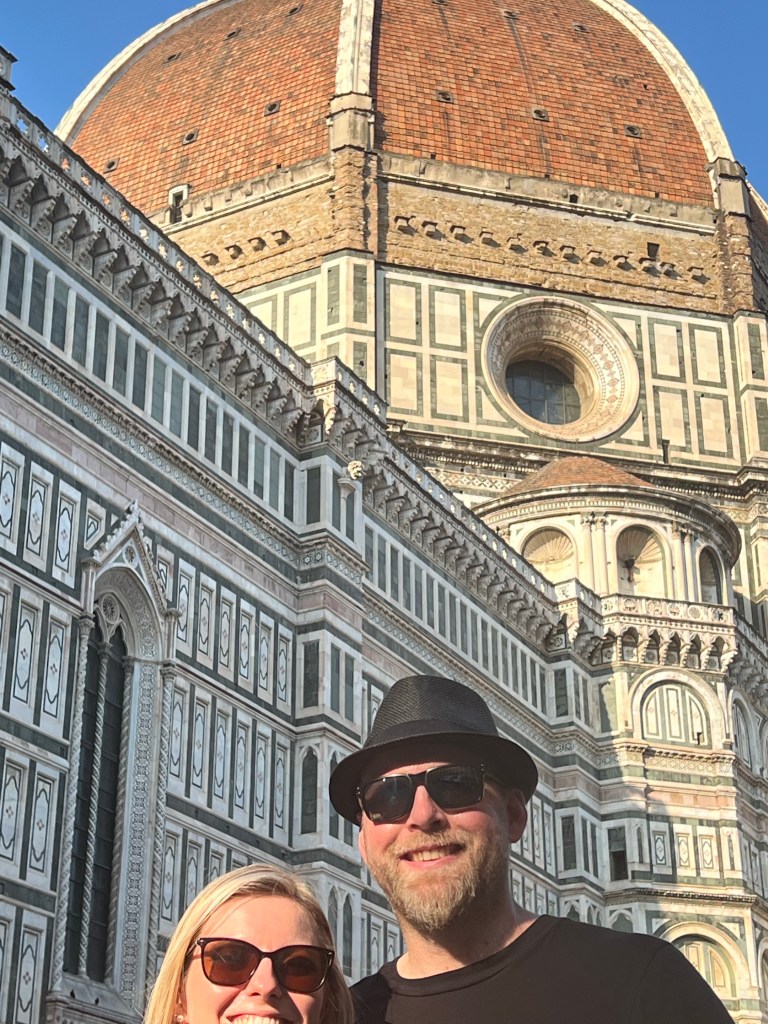
- It wasn’t until we got back to our hotel room to look at the photos that we realized that she, unlike all of the other guides we had, didn’t offer to take our photo- we had to ask. She did comment on how she wanted to really focus in on just us (which she definitely accomplished) and she thought the iPhone took amazing photos. While the iPhone has the capacity to take great photos, there’s definitely some room for error. We had a good laugh at some of these shots hope you do too.



 Air, Landier, and Sea
Leave a reply to Maria Mullen Cancel reply