
We’ve have a very full day of travel. We started in Bhutan, flew to Katmandu, changed planes, flex to India for a fuel stop, and then had a 7 hour flight to Cappadocia (Cap-uh- doe-key-uh).
We did get some good rest on the plane though, especially with the fancy bedding they set up for us.

Despite the extensive travel, we started our time in Turkey with a visit to the Open Air Museum.
Now, I must admit, after a long day, I wasn’t exactly jumping out of the van, excited for a museum tour, but I must say it was incredible!
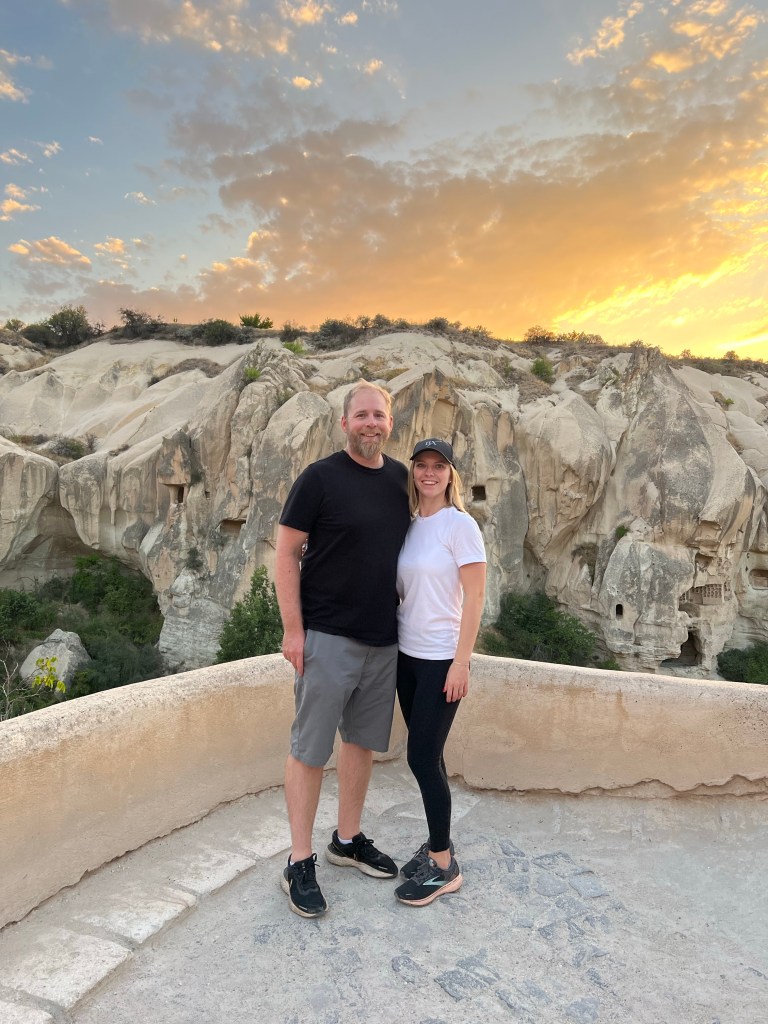
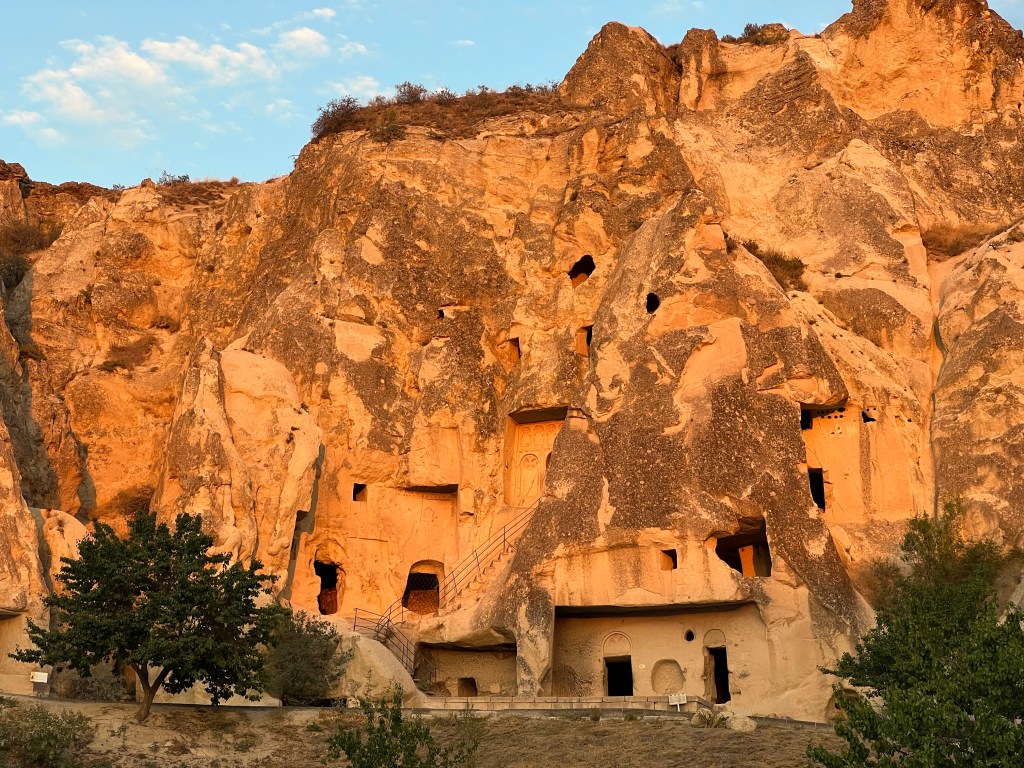
In Cappadocia, which is in the Asian portion of Turkey, there are many natural stone pillars, made of very porous volcanic rock.
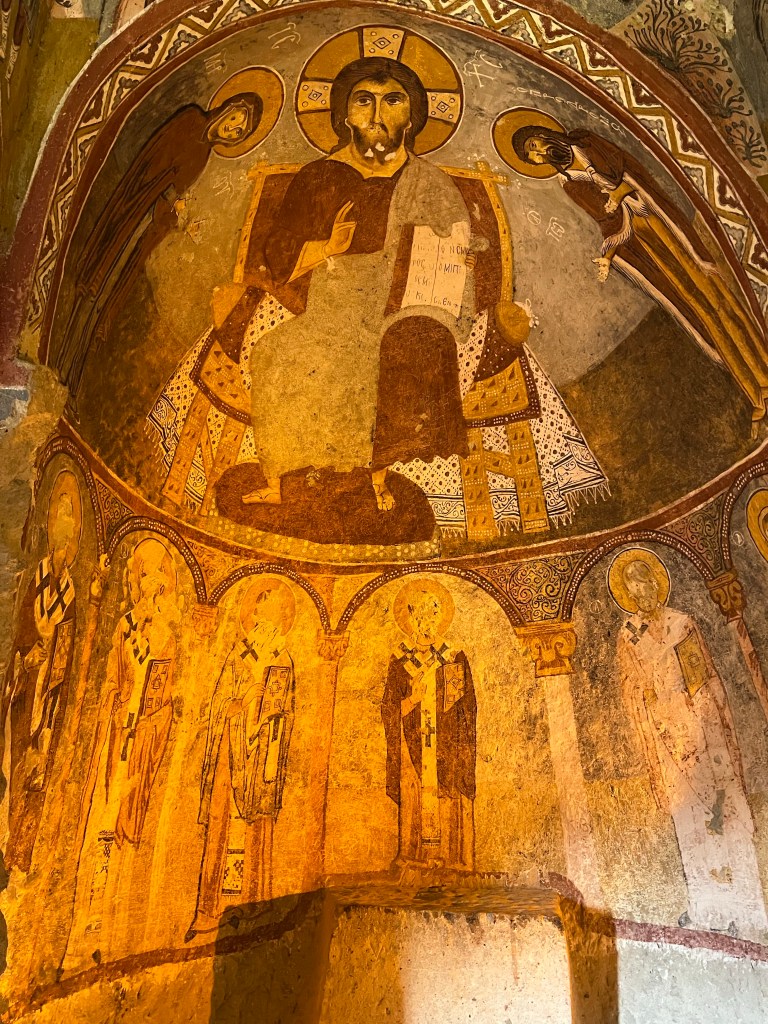
Since they’re so porous, they’re actually very easy to carve into, so very early Christians made caves in these rocks, which they used as churches.
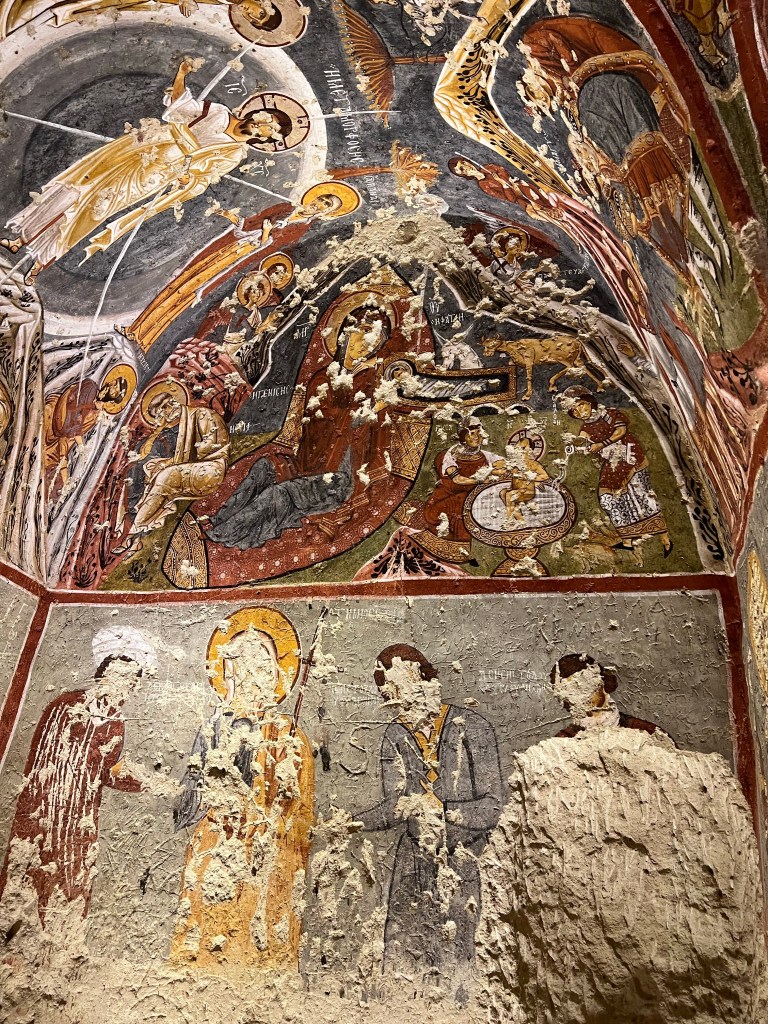
The paintings on these walls date back to the 11th and 12th centuries. The caves provide the perfect temperature to preserve the artwork, which is why it looks so fantastic today.
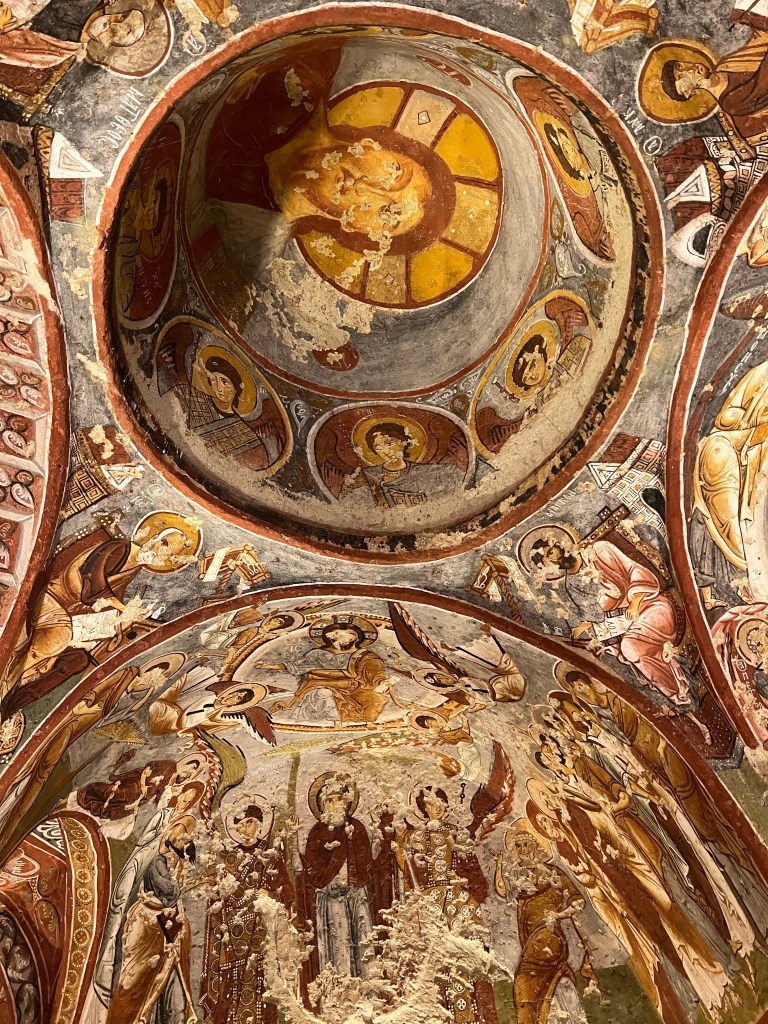
The Christians were persecuted in Turkey, which is why we’re guessing that some of the faces look like they were intentionally scratched off.
Not only can you find ancient Christian churches in the stone structures, but you can also find our hotel.
In fact, numerous hotels in Cappadocia are carved into the rocks, and our guide said buying a cave and flipping it into a hotel is something that’s quite lucrative to do right now. The cave hotel did not disappoint.
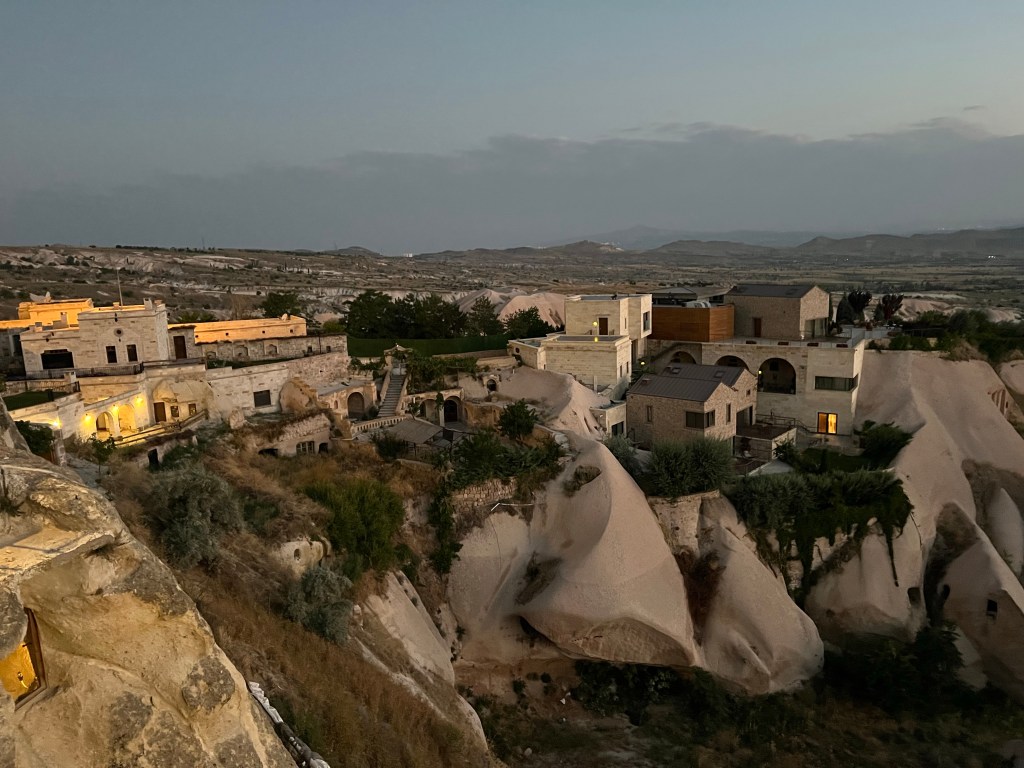
It has absolutely gorgeous views, and the rooms are quite ornate, and decorated with many Turkish rugs.
After a wonderful dinner, full of laughs with some of our new friends on the trip, we headed to bed, ready for an early morning.
We started our day at 4:30 AM for another hot air balloon ride.
The thing that’s nice about Turkey is it’s like Vegas spring or fall temperatures, so the morning is cool, but not cold like Africa.
We all gathered, had some coffee, resolved that although it was early the hot air balloon ride would be worth it.
That is, until, it got cancelled.
In Turkey the wind is variably, so there’s a team of officials who decides if it’s safe or not to fly.
Today was a no fly day, so we will have to try again tomorrow.
But since we were all already up, we headed out to watch the sunrise over Love Valley.
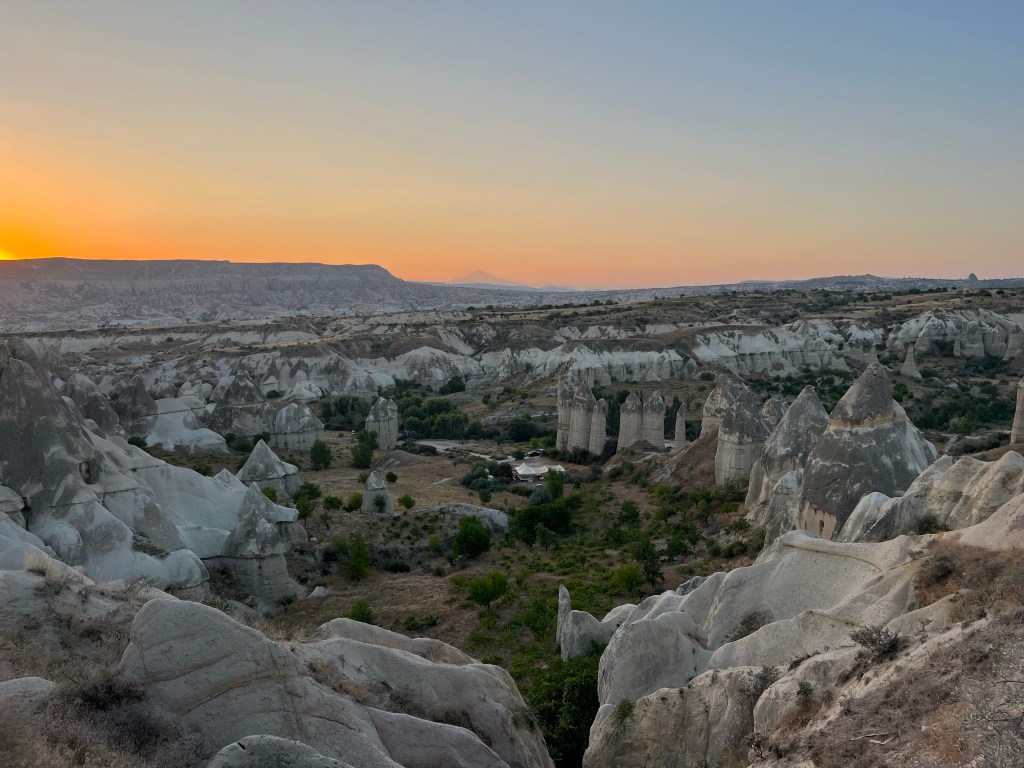
If you look at the pictures, you’ll see the rock structures in the middle of the valley (natural rock structures, by the way) and then you can figure out for yourself why they call it love valley.
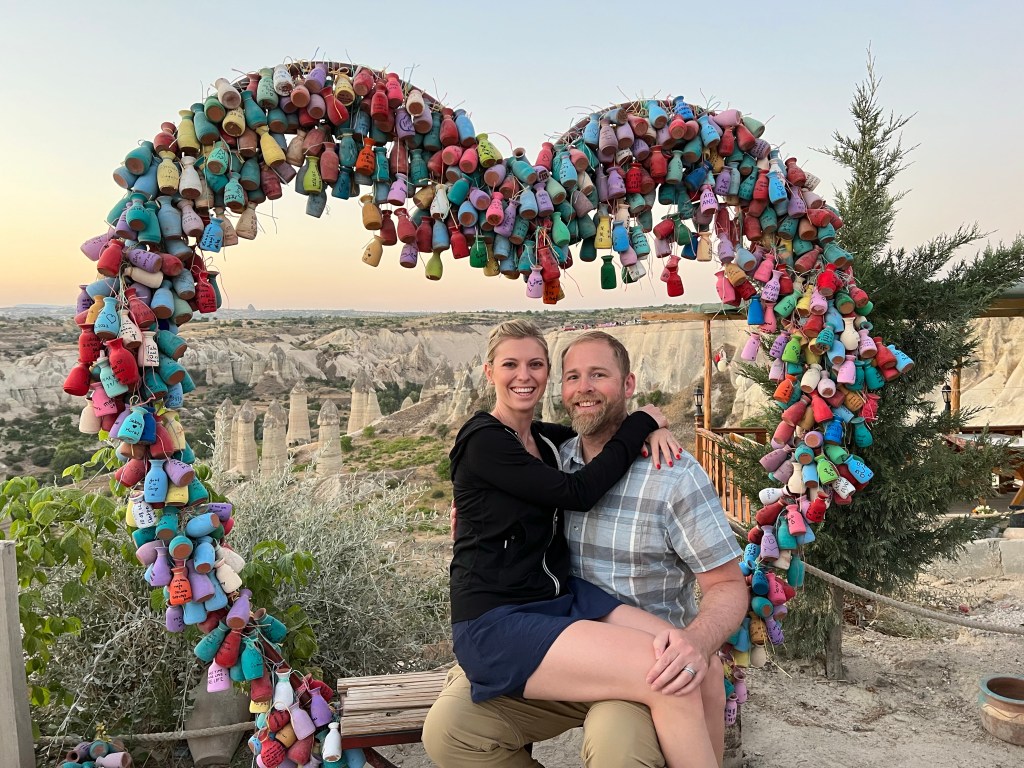
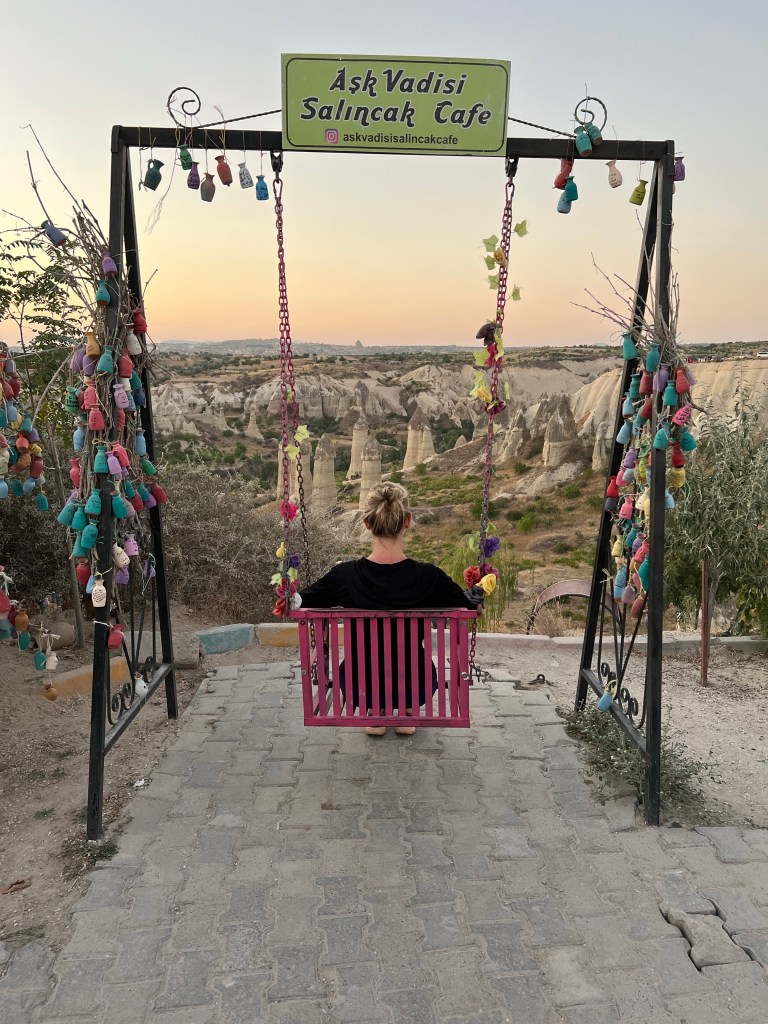
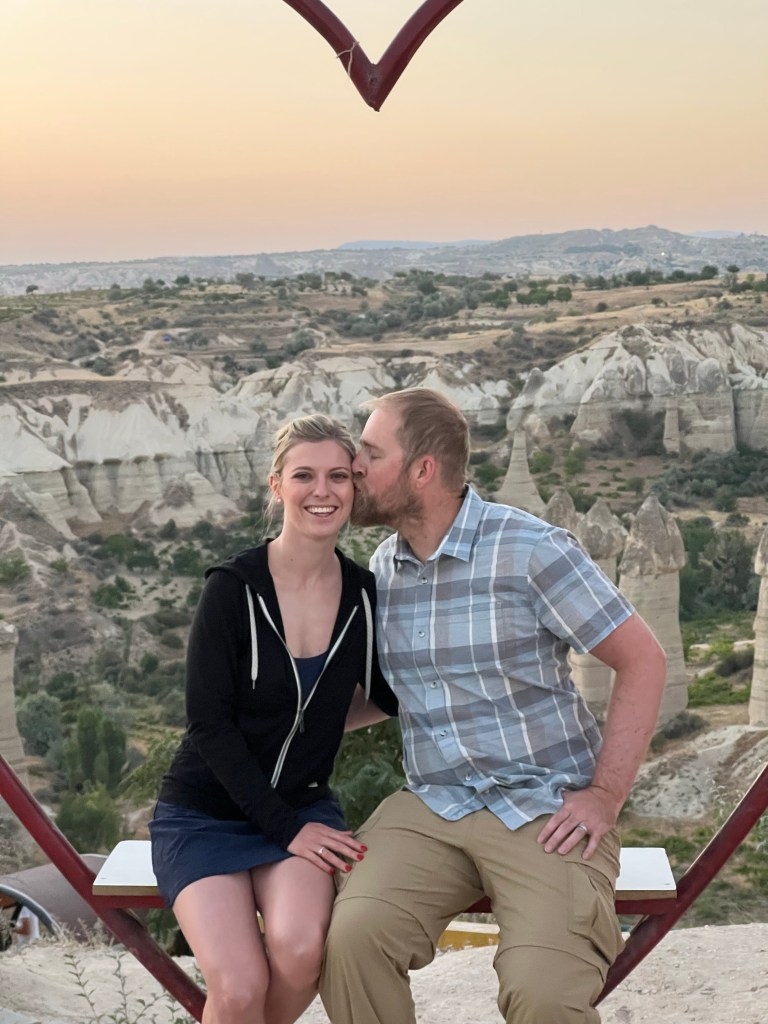
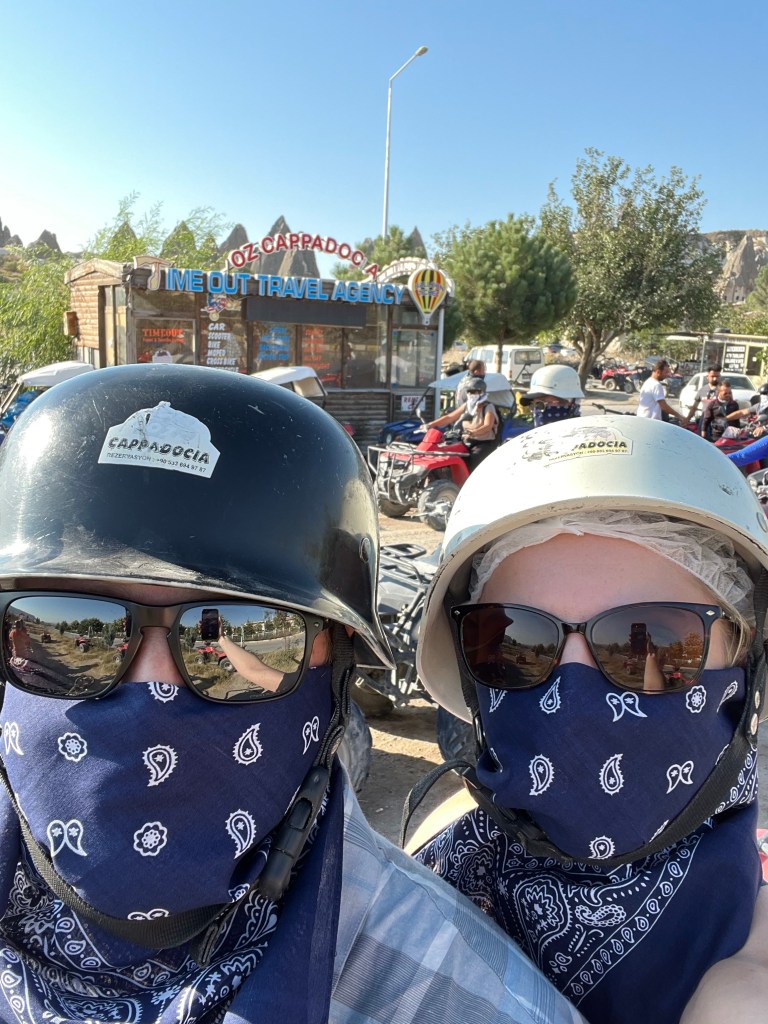
After enjoying the gorgeous sunrise, we enjoyed the bush breakfast that was originally planned for after the balloon ride, and then got to ATV back to the hotel.

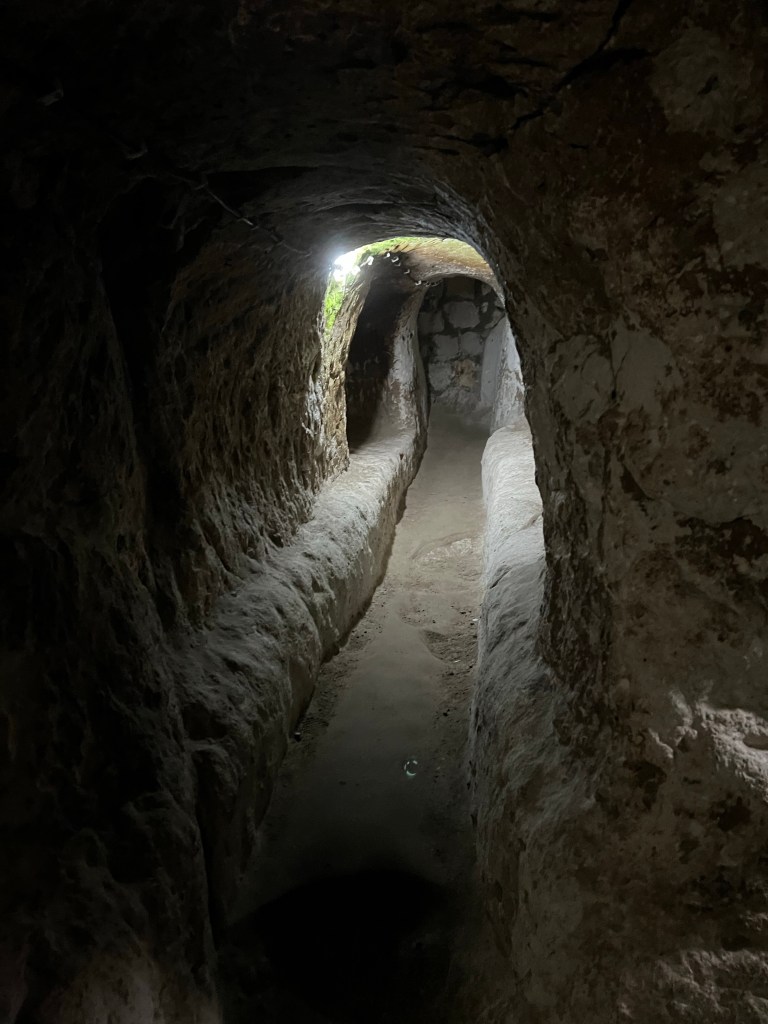
Our afternoon activity was visiting the underground city. It was initially constructed in the 8th and 7th centuries BCE.
Due to the caves’ perfect temperature for preservation, the original use was for storing food, wine, and animals (including camels). Talk about fitting a camel through the eye of a needle.
Between 7 AD and 11AD, persecuted Christians used these tunnels as hiding places.
In the 14th century the Turkish people used the very narrow tunnels as hiding places to avoid persecution from Mongolian invasions.
They weren’t defenseless though. The pathways are very small so only one intruder could enter at a time, making it easy to successfully counter attack.
What’s been discovered so far is about one square mile of these tunnels. It descends about 280 feet into the ground.

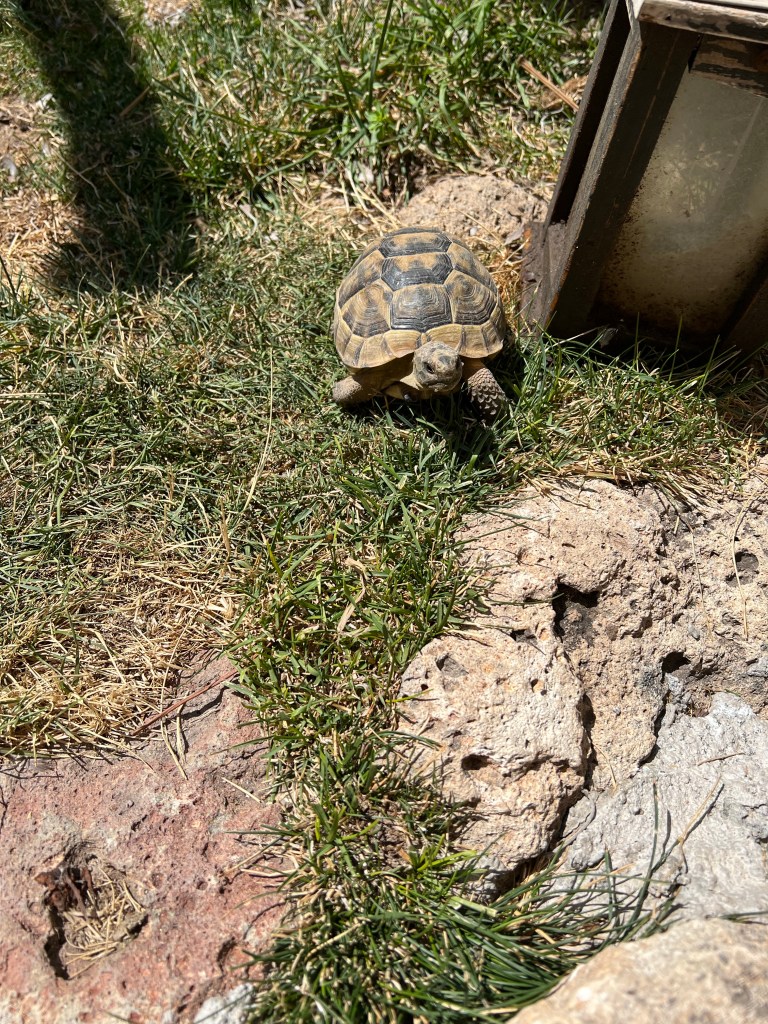
Back at our cave hotel, we came across many tours that like to roam the property. We thought they were all quite cute until one rogue turtle starting beating up (literally pushing and biting) another turtle and Bryce had to intervene. He took a rock and made a partition between the two and then guided the mean turtle in the other direction. It was quite the heroic act.
After saving the turtles, we had dinner at a local pottery museum and studio. It’s also built in a cave and is a family operated business.
This was one of my favorite parts of the trip.
As my parents can attest from all of the pinch pots, vases, and ceramic boxes I kindly left at their house when I moved out, I was quite the potter in high school. So to see such incredibly intricate and beautifully hand-crafted pottery was really amazing.
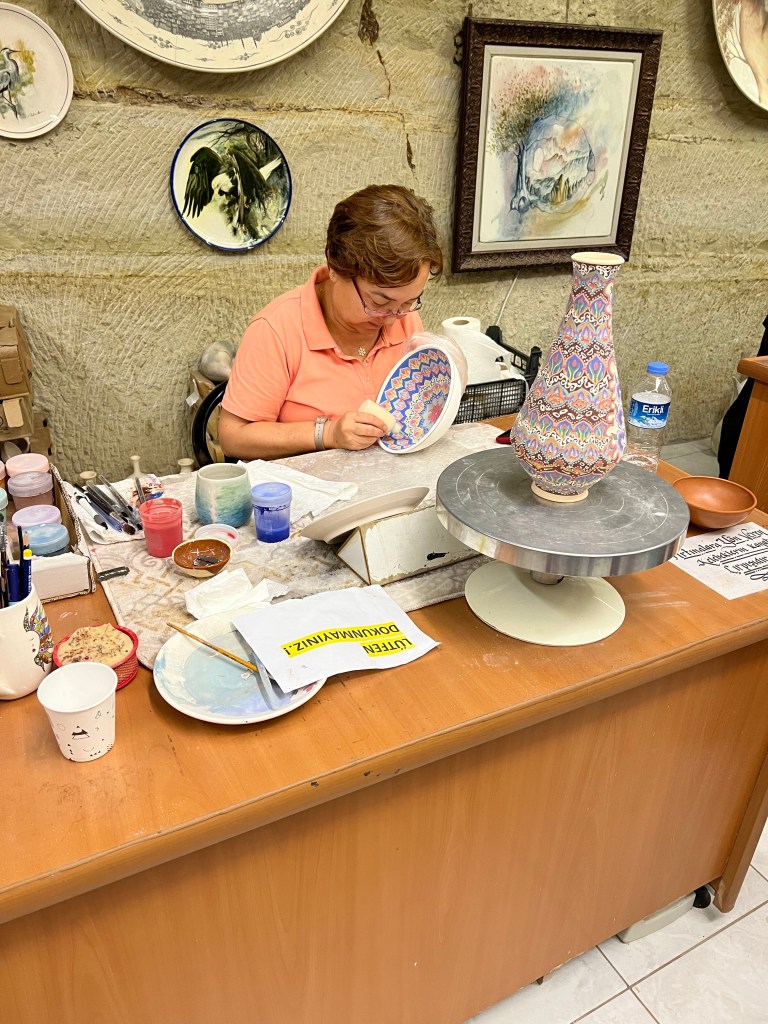
After the pottery is thrown, it sits for two weeks to dry and then is fired in the kiln. The artist then hand draws the design, and then paints it. Lastly, it gets a glaze and is fired a second time.
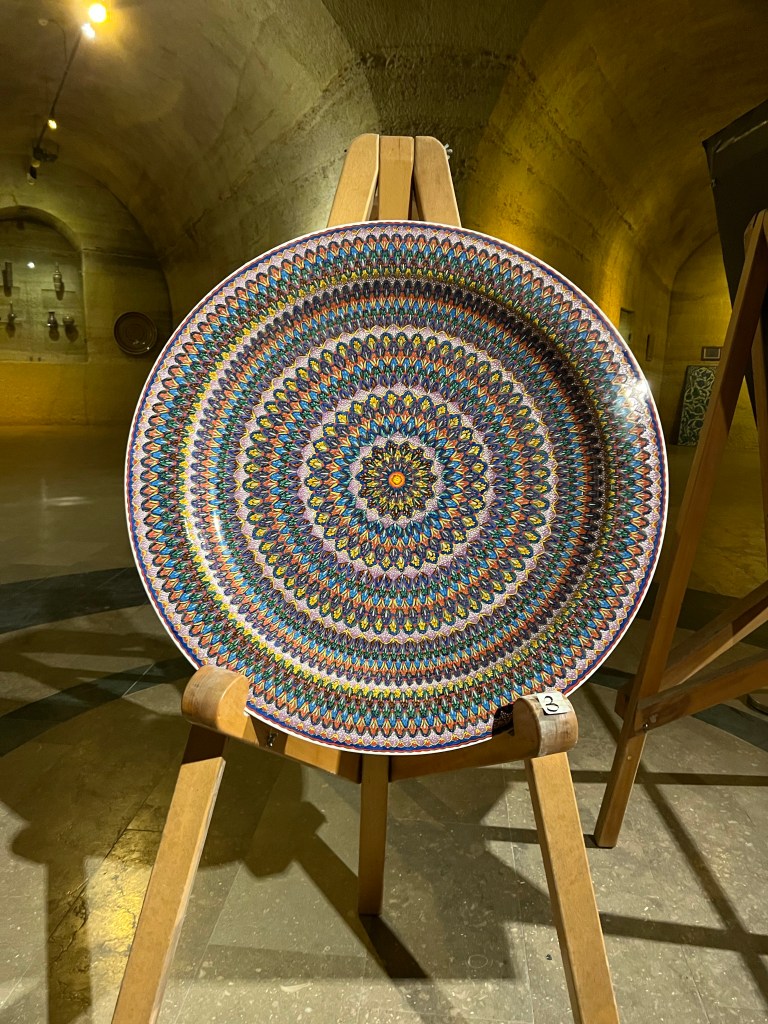
The family has their own signature design (shown below) which is all hand-painted with horse-hair brushes, one dot at a time.


 Air, Landier, and Sea
Leave a comment